
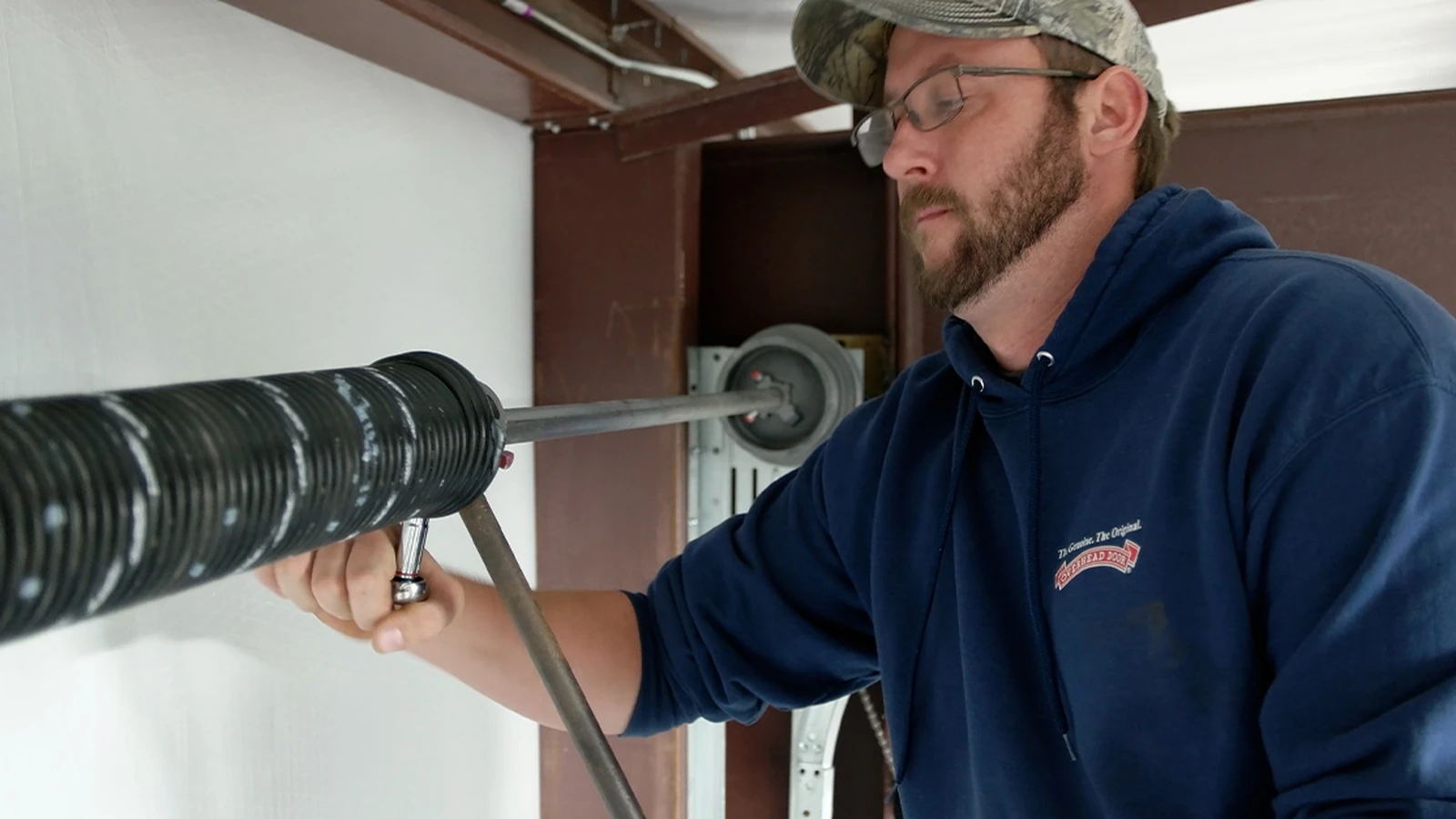
When your garage door won’t open, it’s easy to assume the problem lies with the opener motor. However, the real culprit is often a broken spring. Garage door spring repair in Quincy, IL requires a trained technician who can fix it safely and effectively. A broken spring leaves the door too heavy for the opener to handle alone. Repairing such a failure is not a DIY task—handling a torsion spring can be dangerous due to the immense energy it stores.
A broken spring is unmistakable. You’ll likely notice the garage door becoming exceedingly heavy or failing to open at all. Springs wear out with use, and a worn spring is more likely to give out during cold weather, which is why breaks often seem to happen on the first cold mornings of the season.
⚠️ Important: Never attempt to repair a torsion spring yourself. The torque and potential force behind a winding or unwinding spring can cause severe injury.
Handling garage door springs requires expertise. The torsion energy stored in these springs is enough to cause serious injury if released improperly. Using makeshift tools like screwdrivers instead of proper winding bars increases the risk of accidents. Older extension spring systems, which stretch along the tracks, should also have safety cables running through the springs; if yours don’t, have them added.
Professional technicians have the right tools and knowledge to safely manage these repairs. They ensure that the new springs are correctly balanced, restoring smooth and safe door operation.
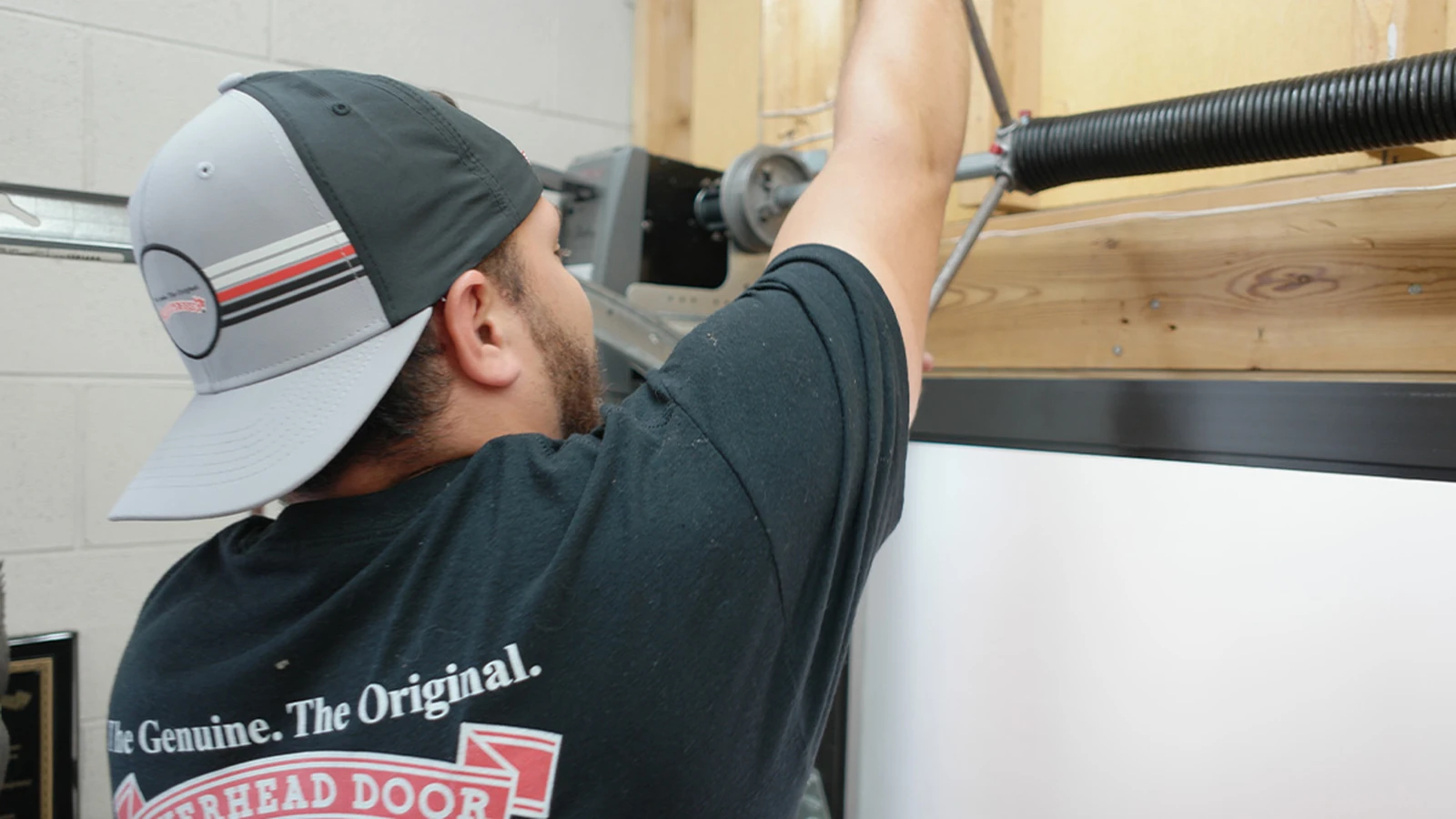
Professional repair involves several key steps:
A technician will also check the cables, drums, rollers, and bearings while the door is apart, since worn parts there can shorten the life of new springs.
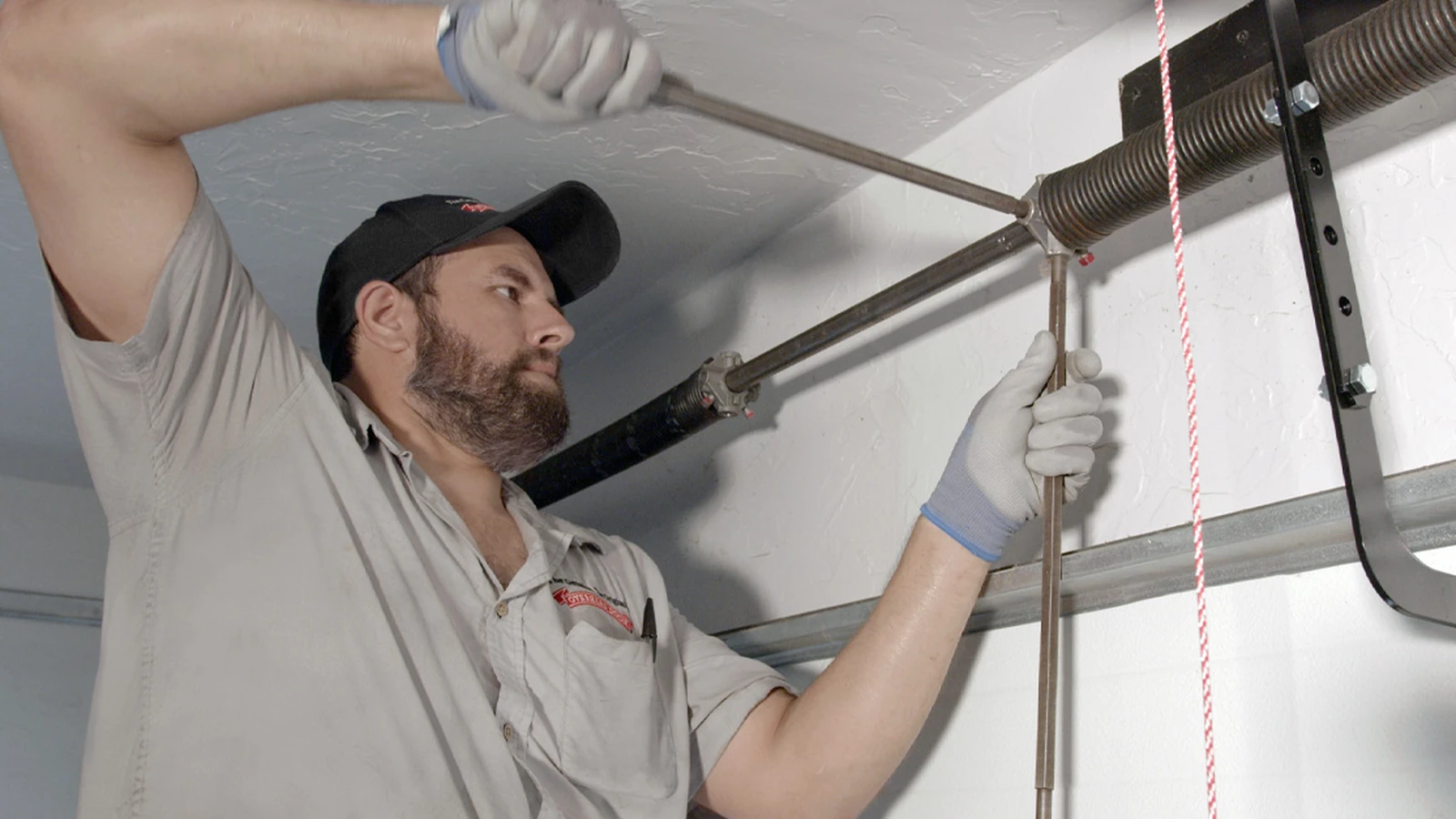
Most newer doors use torsion springs, mounted on a shaft above the door, which wind and unwind as the door moves. Older doors often use extension springs that stretch along each horizontal track. Both store enough energy to cause serious injury. Extension springs should have safety cables running through them so a broken spring can’t fly loose. A technician will match the replacement springs to your door’s weight and size so the door stays balanced.
Until a technician arrives, treat the door as out of service. Leave it closed if it is closed, unplug or disconnect the opener so nobody presses the button by habit, and keep children and pets out of the garage. If the door is stuck open, don’t pull the emergency release: without spring tension, the door can drop. Park a car outside if you’ll need it, and let the technician know whether the door is open or closed when you call.
It depends on the spring and on how often the door is used: springs wear out with each open-and-close cycle. A busy household wears springs out sooner. Have them checked during routine service, and replace them when they show wear or the door loses balance.
No. The remaining spring can’t carry the door’s weight safely, the door may lift unevenly, and the cables can come off their drums. Leave the door closed until both springs have been checked.
The cables, drums, bearings, and rollers. Cables wear along with the springs and are often replaced at the same visit, and worn bearings or rollers can shorten the life of new springs.
They should make its job easier. Correctly matched springs carry the door’s weight, so the opener only guides it. After the repair, the technician should check the opener’s force and reversing settings.
A heavy door, a gap in the spring, or a loud bang from the garage are all signs to stop using the door. Garage door spring repair in Quincy, IL should be handled by a technician with the right tools. Contact our Quincy team to schedule a repair.